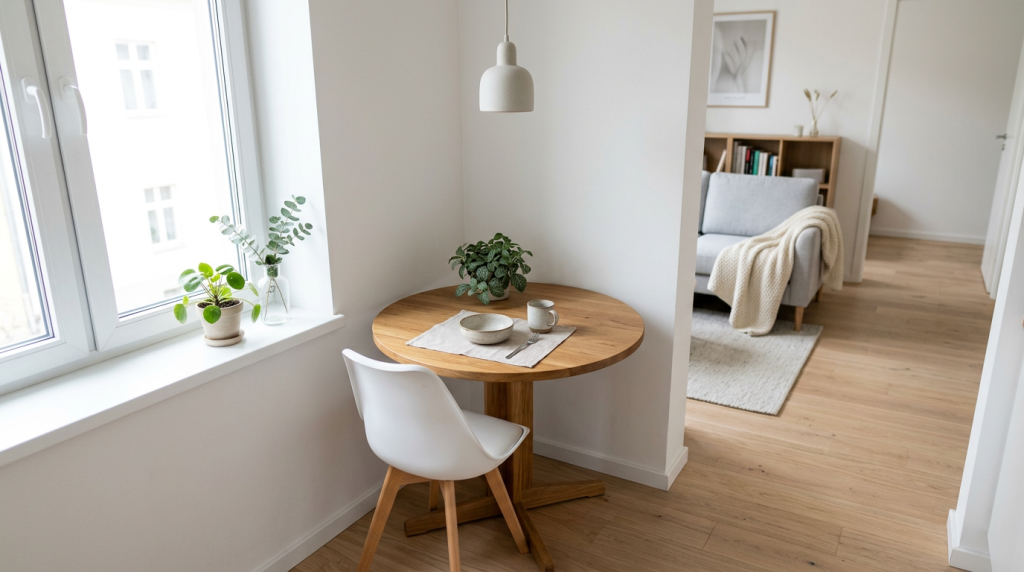
The best tables for small apartments take up as little floor space as possible while still being useful. This page covers a range of options, including fixed designs for stable dining setups and flexible designs that can expand or shrink depending on what you need. Each pick was chosen based on how much floor space it takes up and how well it works in a tight layout. By the end, you’ll know which table type fits your space and how to choose between them.
Best Dining Tables for Small Apartments
The nine types below cover the full range of shapes, heights, and configurations a small-apartment buyer is likely to consider.
Round Pedestal Table
A 36-inch round pedestal base has no corner legs, so chairs pull out without getting blocked and people can move around the table easily. Seats 2–4 and works in corners or open floor plans equally well.
Drop-Leaf Table
Folds down to as little as 10–12 inches deep when both leaves are lowered, then opens to seat 4 when you need it. Push it flat against a wall between meals and you get your floor space back entirely.
Extendable Rectangular Table
A compact base, typically 28–32 inches wide by 36–48 inches long, extends with a pull-out leaf to seat 6 or more. The fixed size handles daily use; the extension handles guests.
Glass-Top Table
A clear glass or acrylic surface cuts down on visual bulk in tight rooms because sightlines pass through it rather than stopping at the edge. Available in both round and rectangular forms, typically 36–42 inches across.
Small Rectangular Table (2-Seater Fixed)
A fixed table at roughly 24 by 36 inches seats two comfortably and fits within a kitchen footprint or against a dining alcove wall without needing clearance on all four sides. No moving parts.
Bar-Height Table with Tuck-Under Stools
Counter or bar height, 36 to 42 inches, paired with stools that slide fully under the tabletop when not in use. Keeps the floor visually clear and works well in kitchens where standard chair height would crowd the space.
Wall-Mounted Fold-Down Table
Mounts directly to the wall and folds flat when not in use, leaving zero floor footprint. Most models seat 2 at roughly 24 by 32 inches when open; some extend to seat 4.
Nesting or Stackable Side Table Set
Two or three tables that stack or nest together take up the footprint of a single small table. Pull them apart to create an improvised dining surface for 2–3 people, then stack them back when the meal is done.
Tulip-Style Round Table
A single central pedestal with a round or oval top, typically 36–48 inches in diameter, keeps the floor plan open and removes the visual clutter of four table legs in a compact room. Often found at mid-to-premium price points in marble, wood, or laminate finishes.
Shape, Expandability, and Material: The Three Decisions That Drive the Right Choice
The list above includes fixed options like the small rectangular table and glass-top table for layouts where the dining footprint stays the same, and drop-leaf, extendable, and fold-down options for layouts where the table needs to adapt. Shape, expandability, and material are all represented, and those three variables are what you need to work through before buying, not just table size.
On shape: round pedestal and tulip-style tables let people move around all sides without corner interference, making them the better choice in open-plan rooms where the table sits away from walls. Rectangular options, fixed or extendable, make better use of wall-adjacent placement where only two or three sides need clearance.
On expandability: a fixed small rectangular table or bar-height setup needs no configuration and suits layouts where the dining footprint stays consistent. Drop-leaf and extendable tables add capacity for guests but require measured clearance in both the collapsed and expanded positions before you commit.
On material: glass-top and acrylic tables reduce visual bulk in tight rooms where sightlines matter, but you trade some durability and surface resilience for that effect. Solid wood or laminate options, including the tulip-style table, hold up better to daily use and are the stronger choice where longevity matters more than visual lightness.
On height: bar-height tables with tuck-under stools keep the floor visually clear and work well in kitchen-adjacent setups where standard chair height would crowd the space. Standard-height options, round pedestal, drop-leaf, extendable, fit more naturally into living areas where the table also doubles as a workspace.
Table Type by Space: Studio, Small Kitchen, and Guest Seating
The right table type also depends on which specific constraint your space has.
Studio Apartment
The dining area shares open floor space with living and sleeping zones, so floor footprint and visual weight both matter. The wall-mounted fold-down table, drop-leaf table, and round pedestal table are the strongest options here. They either disappear when not in use or keep the floor plan open through base design. The glass-top and tulip-style tables are also strong where a permanent table is preferred.
Small Kitchen Dining
The table sits within or directly adjacent to the kitchen footprint, where clearance is limited on multiple sides. A small fixed rectangular table or a bar-height table with tuck-under stools fits this context best. Bar height is worth focusing on in galley-style kitchens where standard chair height competes with cabinet and counter access.
Occasional Guest Seating
The table needs to work for 1–2 people daily and expand for 4 or more when needed. Drop-leaf and extendable rectangular tables are the main answer here. Measure for both the collapsed and expanded footprint before buying. Expanded configurations need meaningfully more clearance than the daily-use size suggests.
Who This Guidance Is For
This list applies if you’re furnishing a studio or one-bedroom apartment for the first time and need a dining table that doesn’t eat up the floor plan. It also applies if you’re replacing an oversized table that blocks traffic flow, setting up a small kitchen with no separate dining room, or working with a table that will double as a workspace.
Matching Table Type to Floor Plan in a Small Apartment
Shape, expandability, and storability are what actually determine whether a dining table works in a small apartment, not style or price. A round pedestal suits open layouts; a rectangular table earns its place against a wall. What most buyers miss is measuring for both the collapsed and expanded footprint before committing. That gap in clearance is often the difference between a table that fits and one that doesn’t. If you’re ready to narrow down your options, [browsing apartment-scale dining tables by size] can help you find the right starting point.
Comments
Comments are closed for this post.