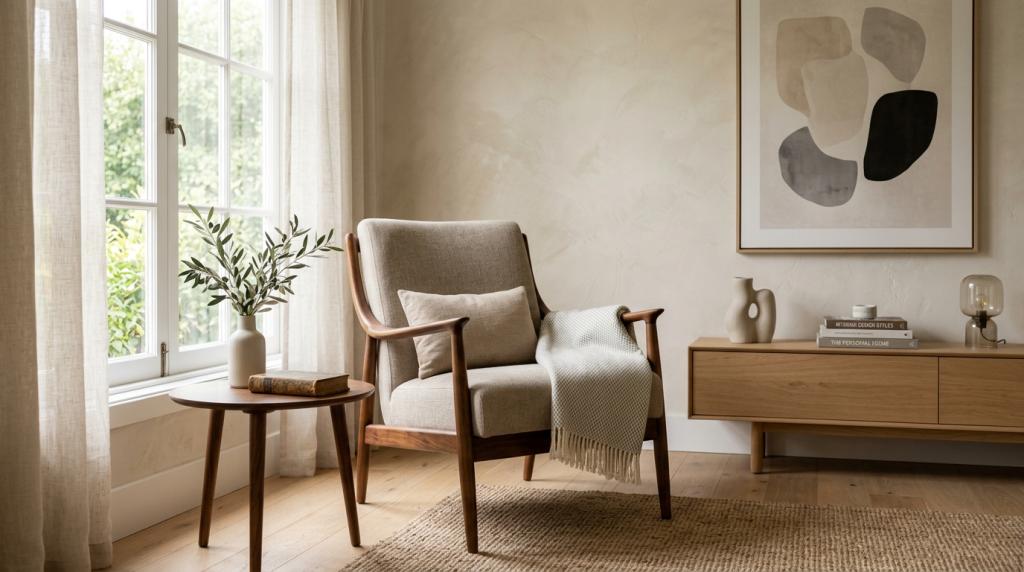
Interior design styles are defined categories that describe how a space looks, feels, and comes together through specific materials, colors, and forms. This page covers the most recognized styles in use today, explaining what makes each one distinct and how they differ from one another. If you’re trying to name a style you already have at home, or just exploring options for a new space, the descriptions here give you a solid basis for comparison. By the end, you’ll be able to name, tell apart, and evaluate interior design styles with confidence.
The Full Range of Named Interior Design Styles
Minimalist
Clean lines, open space, and a deliberate reduction of objects define minimalist interiors. The palette runs neutral: white, off-white, warm grey, and black. Furniture is chosen for function and form, not decoration. Every element earns its place. Don’t confuse this with contemporary, which allows more layering and trend-driven detail.
Industrial (Loft)
Exposed brick, raw concrete, steel beams, and unfinished surfaces are the hallmarks of industrial style. The palette is dark and muted: charcoal, rust, and aged metal tones. The overall atmosphere reads urban and utilitarian. This style works best in open-plan or converted spaces where architectural rawness is already present.
Rustic
Rustic interiors center on natural, imperfect materials: reclaimed wood, stone, rough-hewn timber, and woven textiles. The palette is warm and earthy, running terracotta, ochre, cream, and deep brown. Industrial also uses raw materials, but rustic produces warmth and a sense of age rather than urban edge.
Contemporary
Contemporary style reflects what’s current in design at any given moment, which makes it fluid rather than fixed. It typically features clean silhouettes, mixed materials, and a neutral base palette accented with bold or seasonal color. Unlike modern style, which refers to a specific mid-century design period, contemporary keeps evolving.
Modern
Modern style is rooted in the mid-20th century and has specific, fixed characteristics: flat surfaces, minimal ornamentation, and a strong emphasis on horizontal and vertical lines. Materials lean toward teak, walnut, molded plastic, and chrome. The palette is restrained: warm neutrals, black, and white, with occasional saturated accent colors.
Scandinavian
Scandinavian design focuses on function, light, and simplicity, drawing from Nordic design traditions. Materials include light woods (birch, pine, ash), wool, linen, and leather in natural tones. The palette stays pale: white, soft grey, blush, and muted sage, with warmth introduced through texture rather than color.
Bohemian (Boho)
Bohemian interiors layer pattern, color, and texture without a strict organizing principle. Rattan, macramé, kilim rugs, embroidered textiles, and collected objects coexist freely. The palette is rich and eclectic: jewel tones, terracotta, and deep greens. The overall effect is intentionally relaxed and personal.
Traditional
Traditional style draws from European design heritage, particularly English and French, featuring ornate furniture, symmetrical arrangements, and rich detailing. Materials include dark hardwoods, silk, velvet, and carved wood. The palette favors deep, saturated tones: navy, burgundy, forest green, and gold.
Transitional
Transitional style bridges traditional and contemporary, combining classic furniture forms with cleaner lines and updated materials. It avoids the ornamentation of traditional and the austerity of minimalist, landing in a comfortable middle ground. Neutral palettes with soft contrast are characteristic: taupe, greige, ivory, and warm grey.
Coastal (Hamptons)
Coastal interiors reference the textures and palette of the seaside: whitewashed wood, natural linen, jute, and rattan. The color palette runs white, sandy beige, soft blue, and seafoam. In its more refined, upscale form, it’s often called Hamptons style, which introduces more structured furniture and polished finishes alongside the natural materials.
Mid-Century Modern
A subset of modern style focused specifically on the 1950s–1970s design period, mid-century modern features tapered legs, organic curves, and a mix of natural and manufactured materials: walnut, teak, fiberglass, and molded plywood. The palette includes warm neutrals alongside avocado, mustard, and burnt orange. It’s distinct from broader modern style in its period-specific forms and color sensibility.
Art Deco
Art Deco interiors are defined by geometric patterns, bold symmetry, and a sense of glamour rooted in the 1920s–1930s. Materials include lacquered surfaces, mirrored glass, brass, marble, and velvet. The palette is high-contrast: black and gold, ivory and chrome, deep jewel tones against metallic accents.
Japandi
Japandi blends Japanese minimalism with Scandinavian simplicity, producing interiors that are spare, warm, and carefully composed. Natural materials like bamboo, light oak, linen, and ceramic are used with restraint. The palette is muted and earthy: warm white, charcoal, clay, and moss. Negative space is treated as a design element in its own right.
Farmhouse
Farmhouse style draws from rural American vernacular design, combining practicality with comfort. Shiplap, barn wood, galvanized metal, and cotton textiles are common materials. The palette is soft and worn: white, cream, sage, and faded blue. The overall atmosphere is casual and lived-in. It’s distinct from rustic in its lighter palette and more structured, functional furniture forms.
Hollywood Regency
Hollywood Regency is a maximalist style defined by bold color, high gloss, and theatrical contrast. Lacquered furniture, mirrored surfaces, velvet upholstery, and metallic accents are central. The palette favors saturated, high-impact combinations: emerald and gold, black and white with fuchsia. The effect is deliberately glamorous and dramatic.
What Separates Similar Styles
The list above spans historically fixed periods like Art Deco and Mid-Century Modern, alongside fluid, evolving styles like contemporary, giving a complete reference rather than a partial one. Closely related styles (modern vs. contemporary, rustic vs. farmhouse, industrial vs. rustic) appear as separate entries with clear distinctions, which helps readers who have a general direction but need to tell apart styles that look or feel similar before committing.
A few patterns are worth keeping in mind as you move through the definitions. Rustic, bohemian, and farmhouse styles use warm, earthy palettes and natural textures to create inviting, layered spaces, while minimalist and Japandi achieve calm through restraint: neutral palettes, fewer objects, and deliberate negative space. Industrial and rustic both rely on raw, unfinished materials, but industrial produces an urban, utilitarian atmosphere through metal and concrete, while rustic generates warmth through wood, stone, and woven textiles. The material overlap can mislead you. The atmosphere is what separates them.
The difference between fixed and evolving styles also matters in practice. Modern, Mid-Century Modern, and Art Deco are anchored to specific historical periods with defined characteristics. Contemporary reflects current design trends and keeps shifting, which is a meaningful difference if long-term consistency matters to you. Finally, industrial and loft-style interiors work best in open, architecturally raw spaces, while traditional, transitional, and Art Deco translate well into more defined, room-by-room layouts where symmetry and furniture arrangement carry more weight.
How to Apply These Definitions to Your Own Space
The right starting point depends on what you’re trying to do. If you’re decorating from scratch, minimalist, contemporary, rustic, and transitional are among the styles most consistently applied across multiple rooms, and all are well-supported by widely available furniture ranges. Industrial and loft style work best where the architecture already supports it: open-plan layouts, exposed structural elements, or converted spaces. In conventional room configurations, they can feel forced.
If you’re trying to name a style already present in a space, use the visual characteristics, materials, and color palettes in the definitions as a matching tool. Look at the dominant materials (wood type, metal finish, textile weight), the overall color palette, and the silhouette of the furniture, then cross-reference against the entries to find the closest match.
If you’re figuring out your personal design style, move through the list and note which entries produce an immediate response, visual or emotional. Where two styles feel similarly appealing, use the distinction notes in those entries to identify which set of characteristics more accurately reflects what you’re drawn to.
Matching Your Style to Your Home’s Architecture, Materials, and Palette
Style names only become useful when they’re grounded in specifics: the materials already in your space, the palettes you keep returning to, the architectural details you can’t change. When two styles feel similar, the difference usually lives in atmosphere, not aesthetics. Start with what’s concrete, and let the architecture do the filtering. Then browse our room-by-room style guides to take the next step with confidence.
Comments
Comments are closed for this post.