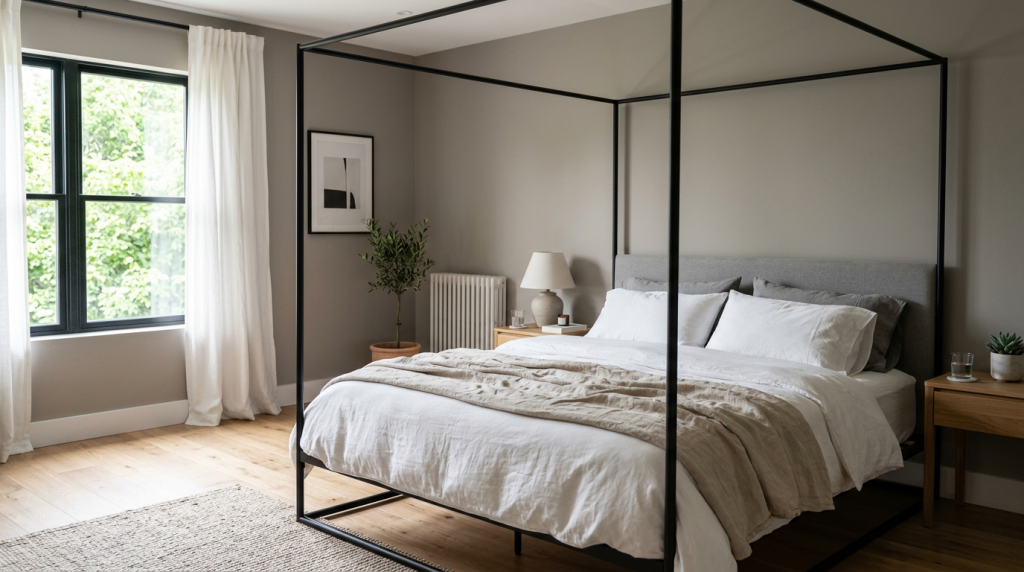
Canopy bed design ideas range from minimalist metal frames to upholstered four-poster styles, and the right choice depends on your room’s size, ceiling height, and existing décor. This page covers the most practical options for contemporary spaces and smaller rooms like apartments, explaining what works in each setting and why. By the end, you’ll have a clear sense of which canopy bed styles suit your space and what to look for before you buy.
Canopy Bed Designs for Modern and Apartment Bedrooms
The nine approaches below range from fully structural to frameless, and from draped to completely open. Each one suits different room conditions and design priorities.
Thin metal open-frame canopy: A minimal four-post frame in matte black, brushed brass, or gunmetal with no fabric. The exposed geometric shape reads as a design object rather than just a piece of furniture, and fits cleanly into contemporary and industrial interiors.
Natural wood four-post frame with clean lines: Solid oak or walnut posts with a simple rectangular top rail and no ornamentation. Works best in Scandinavian, organic modern, or warm minimalist rooms where the wood grain does the visual heavy lifting.
Sheer linen drape on a simple frame: A single panel or two loose panels of unbleached linen hung from a thin metal or wood frame. Adds softness and a cocoon-like quality without the heaviness of full curtaining. Good for bedrooms where texture is the main design layer.
Low-profile two-post half-canopy: A headboard-mounted or wall-mounted canopy structure that extends only over the head of the bed. Built for low ceilings or small rooms where a full four-post frame would feel cramped or eat up too much vertical space.
Floor-to-ceiling curtain rod canopy: A ceiling-mounted rod or track system with panels that frame the bed without any structural frame at all. Good for apartments with standard ceiling heights where drilling into a frame isn’t practical or isn’t allowed.
Neutral-palette canopy with tonal bedding: A white, cream, or warm grey frame paired with bedding in the same tonal range. Keeps the canopy from becoming the focal point and lets it settle into a calm, uncluttered bedroom composition.
Bamboo or rattan canopy frame: A lightweight natural-material frame that adds texture without visual bulk. Works well in smaller rooms because the open weave and warm tone reduce how heavy the structure looks.
Streamlined upholstered canopy bed: A low-to-the-ground platform base with a slim canopy frame in matching or contrasting upholstery. Good for rooms with enough ceiling clearance where a cohesive, furniture-forward look matters more than an airy or open silhouette.
Asymmetric or single-side canopy panel: One canopy arm or a single draped side rather than a symmetrical four-post structure. Reduces the footprint and visual weight in smaller bedrooms while still giving you the layered, enclosed quality that canopy styling is known for.
How Frame Type and Room Condition Interact
The main design judgment running through this list is the shift from ornate to minimalist framing. That shift is what separates canopy styles that look intentional in uncluttered modern rooms from those that feel mismatched or heavy.
Open-frame designs, like the thin metal canopy and the bamboo frame, work in minimalist interiors because they don’t need draping to look finished. Draped or fabric-heavy approaches suit rooms where softness and layering are already the dominant design language. When texture and enclosure are the priority, a sheer linen drape or asymmetric panel gets you the cocoon quality of canopy styling without the structural weight. That makes it a better fit for small rooms than a full upholstered or four-post frame.
Ceiling height is the other variable that determines what’s viable. Low-profile two-post and half-canopy designs work reliably in low-ceiling rooms. Full four-post frames in the same conditions compress the vertical space and make the ceiling feel even lower than it is.
Matching Frame Choice to Room Conditions
These three scenarios cover the most common constraints in apartment and contemporary bedrooms.
Canopy bed in a small bedroom: Focus on frames with a minimal footprint, like the asymmetric single-side panel, the bamboo or rattan frame, or the low-profile half-canopy. The vertical element can add height and definition without overwhelming the room, as long as the base frame doesn’t extend beyond the bed’s own perimeter.
Canopy bed with a low ceiling: Use a headboard-mounted or wall-mounted half-canopy, or a ceiling-track curtain system that frames the bed without adding structural height. Avoid full four-post frames with top rails. The gap between the rail and ceiling will feel tight and will draw attention to the ceiling constraint rather than the bed.
Minimalist or contemporary styling: Go with open-frame designs, like thin metal, clean-line wood, or bamboo, with no draping or with a single loose linen panel at most. The goal is a frame that reads as intentional and architectural rather than soft or romantic. Tonal bedding and a neutral palette keep the canopy integrated rather than dominant.
When a Canopy Bed Works — and When It Doesn’t
A canopy bed works well when the room has enough ceiling clearance that the frame height doesn’t compress the space, the interior is contemporary or minimalist and a sleek open frame reads as a deliberate design choice, and the bedroom has enough floor space that the canopy structure doesn’t dominate the room’s proportions.
It doesn’t work when the ceiling is low and the frame is a full four-post design with a top rail, the room is already heavily furnished and an additional vertical structure adds visual clutter rather than definition, or the existing interior is ornate or maximalist and a minimalist canopy frame creates a stylistic mismatch rather than contrast.
Ceiling Height and Frame Style Are the Two Decisions That Matter
Ceiling clearance determines what’s structurally possible. The room’s existing design language determines what actually looks right. Get those two right and the choice becomes straightforward. Full four-post frames compress low ceilings, while open metal, wood, or half-canopy designs work where heavier options can’t. If you’re ready to start comparing specific frames, browsing canopy bed collections by room size is a practical next step.
Comments
Comments are closed for this post.